

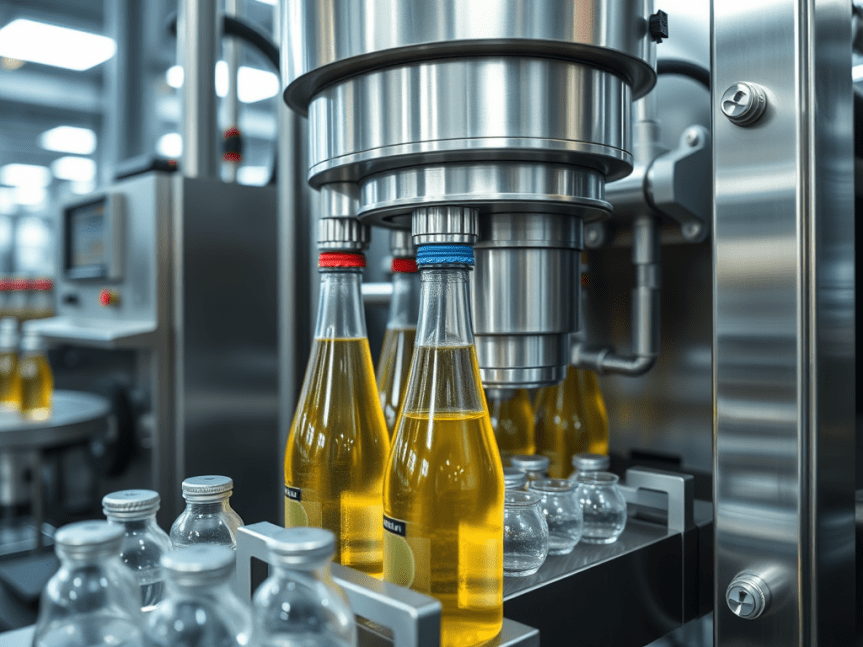
In the fast-paced world of manufacturing and production, industrial filling machines play a pivotal role in ensuring efficiency, accuracy, and consistency. These machines are essential in various industries, including food and beverage, pharmaceuticals, cosmetics, and chemicals, where precise filling of products into containers is crucial. As technology advances, the capabilities of filling machines have expanded, allowing for greater customization and automation. This article delves into the significance of industrial filling machines, exploring their impact on different sectors and highlighting the technological advancements that continue to shape their evolution.
The role of industrial filling machines in modern manufacturing
Industrial filling machines are indispensable in modern manufacturing processes, where speed and precision are paramount. These machines are designed to handle a wide range of products, from liquids and powders to granules and pastes. By automating the filling process, manufacturers can significantly reduce labor costs, minimize waste, and enhance product quality. The versatility of filling machines allows them to accommodate various container sizes and shapes, making them suitable for diverse applications.
In the beverage industry, for instance, filling machines have revolutionized production lines by enabling high-speed filling of bottles and cans with minimal spillage. This not only boosts productivity but also ensures that products meet stringent quality standards. Similarly, in the pharmaceutical sector, filling machines are crucial for maintaining the integrity and sterility of medications, ensuring that each dose is accurately measured and dispensed.
Technological advancements driving innovation
The evolution of industrial filling machines is closely tied to technological advancements that enhance their functionality and efficiency. Modern filling machines are equipped with sophisticated sensors and control systems that allow for precise monitoring and adjustment of the filling process. This level of automation reduces the likelihood of human error and ensures consistent product quality.
Moreover, the integration of IoT (Internet of Things) technology has enabled real-time data collection and analysis, providing manufacturers with valuable insights into their production processes. This data-driven approach allows for predictive maintenance, reducing downtime and extending the lifespan of the machines. Additionally, advancements in robotics have led to the development of highly flexible filling systems that can quickly adapt to changes in product specifications or production volumes.
Future trends and sustainability considerations
As industries continue to prioritize sustainability, the design and operation of industrial filling machines are evolving to meet environmental standards. Manufacturers are increasingly adopting eco-friendly practices, such as using energy-efficient motors and recyclable materials in machine construction. Furthermore, the development of closed-loop systems minimizes waste by recapturing and reusing excess product during the filling process.
Looking ahead, the future of industrial filling machines is likely to be shaped by advancements in artificial intelligence and machine learning. These technologies have the potential to further optimize filling processes by enabling machines to learn from past performance and make autonomous adjustments. This will not only enhance efficiency but also contribute to the overall sustainability of manufacturing operations.
In conclusion, industrial filling machines are a cornerstone of modern manufacturing, offering unparalleled efficiency and precision. As technology continues to advance, these machines will play an increasingly vital role in driving innovation and sustainability across various industries.
 FILLING SOLUTIONS PRO